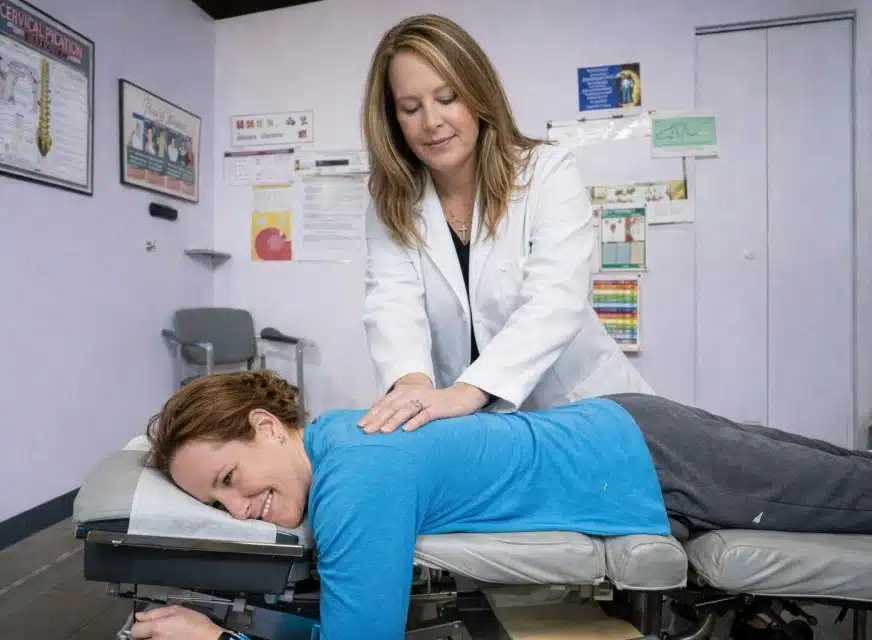
Spinal Decompression Treatment in Chicago, IL
At Chiropractic Chicago, spinal decompression treatment focuses on gently reducing pressure on spinal discs and nerves without surgery. Many people with back pain, sciatica, or disc issues develop symptoms slowly over time as spinal motion becomes restricted.
Dr. Elissa Grossman provides non-surgical spinal decompression in Chicago using chiropractic techniques designed to restore movement, reduce nerve pressure, and support healing. Care is customized based on how each patient presents and how their spine responds.
The goal of decompression care is to improve comfort, mobility, and nerve function while helping patients avoid more invasive options whenever possible. A consultation helps determine whether spinal decompression may be appropriate for your condition.
What Causes Spinal Disc & Nerve Compression?
Spinal disc and nerve compression usually develops gradually, not from a single event. Dr. Grossman explains that long-term mechanical stress plays a major role. Common contributing factors include:
- Spinal misalignment and altered motion: Poor movement patterns reduce normal joint and disc function over time.
- Disc bulges or herniations: Swollen or displaced disc material can press on nearby nerves.
- Degenerative disc changes: Reduced disc height and nutrition increase nerve irritation.
- Repetitive strain or posture stress: Sitting, lifting, or uneven movement patterns add ongoing pressure.
- Old injuries or trauma: Past accidents may quietly accelerate spinal wear and tear.
Compression often builds silently until pain, numbness, or sciatica appears
How Do We Diagnose the Root Cause of Spinal Compression?
Diagnosis at Chiropractic Chicago focuses on understanding why pressure is occurring, not just where it hurts. Dr. Grossman’s evaluation may include:
- Detailed symptom and health history: Pain patterns, nerve symptoms, and activity limitations.
- Postural and movement assessment: How the spine moves, balances, and compensates.
- Orthopedic and neurological testing: To identify nerve involvement or disc irritation.
- Imaging when appropriate: X-rays or MRI referrals may be used to confirm disc or nerve findings.
This information helps determine whether decompression care is appropriate and how it should be applied.
Spinal Decompression Treatment Plan
Spinal decompression is integrated into a personalized chiropractic care plan rather than used as a stand-alone solution. A typical plan may include:
- Flexion-distraction spinal decompression: Gentle, controlled movements that reduce pressure on discs and nerves.
- Targeted chiropractic adjustments: To restore motion and reduce joint restriction.
- Supportive therapies: Such as muscle relaxation or circulation-focused modalities when needed.
- In-office and home guidance: Simple movements or posture strategies to support healing.
Care is adjusted over time based on how the spine responds, with progress reviewed regularly.
Spinal Decompression for Cervical Nerve Symptoms | Patient Case Study
Patient info: Adult patient with an active lifestyle who began experiencing increasing neck and shoulder discomfort that interfered with daily activities.
Symptoms: Neck pain radiating into the arm, shoulder pain, and nerve-related symptoms affecting comfort and movement.
Root cause analysis: Evaluation showed nerve pressure originating from the cervical spine, contributing to arm and shoulder symptoms.
Treatment plan: Non-surgical spinal decompression techniques combined with chiropractic adjustments and supportive in-office therapies, with care adjusted based on response.
Outcome: Arm pain resolved and neck pain reduced by approximately 80 percent within the first month of care, with continued improvement noted.
Patient feedback: “I was surprised how much better my neck and arm felt in such a short time. Moving again felt normal.”
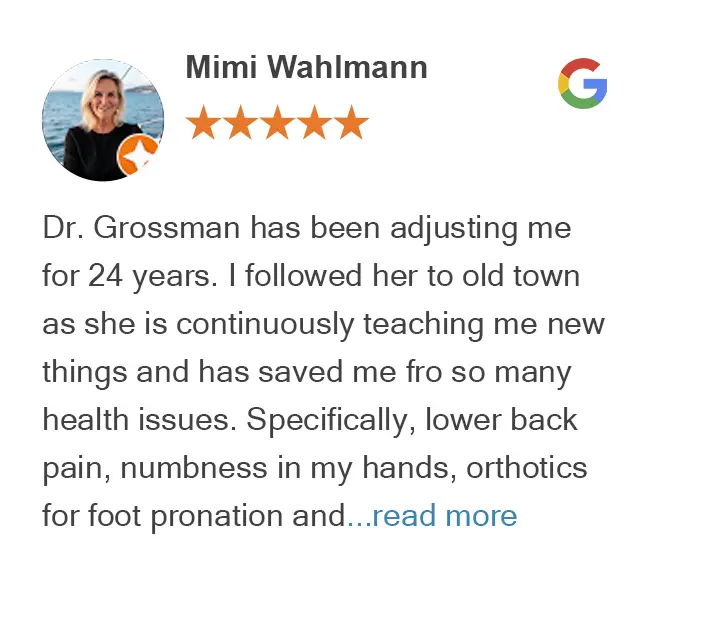
Spinal Decompression Patient Testimonials & Reviews




Doctor Experience in Treating Disc & Nerve Compression
Dr. Elissa Grossman is a Chiropractor Chicago IL patients trust. She has extensive experience evaluating and treating disc and nerve compression conditions affecting the spine. She commonly works with patients experiencing sciatica, disc bulges, herniated discs, and chronic neck or low back pain related to nerve irritation.
Her approach begins with careful diagnosis, including a detailed history, postural and movement assessment, orthopedic and neurological testing, and imaging referrals when appropriate. Dr. Grossman emphasizes understanding why pressure is occurring rather than only addressing symptoms.
Care focuses on conservative, non-surgical chiropractic techniques aimed at restoring motion, reducing nerve pressure, and slowing degenerative changes over time. When findings suggest a condition is outside the scope of chiropractic care or requires medical or surgical evaluation, Dr. Grossman makes timely referrals to ensure patients receive appropriate next-step care.
Book An Appointment
If you are dealing with back pain, sciatica, or disc-related symptoms, spinal decompression may be an option worth exploring. Schedule a consultation at Chiropractic Chicago to learn if this approach is right for you. Call (312) 248-3002 or Book Online using the booking tool below:
What is spinal decompression therapy?
Spinal decompression is a non-surgical approach that gently reduces pressure on spinal discs and nerves to support healing and movement.
How does spinal decompression work on the spine?
It uses controlled spinal motion to relieve disc pressure, improve joint mobility, and reduce nerve irritation.
What are the early signs of spinal disc compression?
Stiffness, localized back or neck pain, reduced range of motion, or discomfort with certain movements.
What symptoms suggest nerve compression or disc herniation?
Pain radiating into the arms or legs, numbness, tingling, weakness, or burning sensations.
Which spinal conditions are commonly treated with decompression?
Disc bulges, herniated discs, sciatica, degenerative disc issues, and some chronic neck or low-back pain cases.
Can spinal decompression be done without surgery?
Yes. This approach is specifically designed as a non-surgical, conservative option.
Can chiropractic care help with disc bulges or herniated discs?
Chiropractic care may help reduce pressure, restore motion, and support healing depending on the case.
What chiropractic techniques are used alongside spinal decompression?
Flexion-distraction techniques, targeted adjustments, and supportive therapies may be used together.
Does spinal decompression help reduce back pain and sciatica?
Many patients experience reduced pain and improved mobility, though results vary by individual.
How long does spinal decompression treatment take?
Some patients notice early changes within weeks, while longer-term improvement often develops over time.
Is spinal decompression painful or uncomfortable?
Most patients describe it as gentle and comfortable.
Do I need imaging before starting spinal decompression treatment?
Imaging is not always required, but may be recommended based on exam findings.
What results can you expect from spinal decompression therapy?
Results vary. The goal is improved comfort, movement, and nerve function, not guaranteed outcomes.
When should you seek care for disc or nerve compression?
If pain, numbness, or weakness persists or worsens, evaluation is recommended.
What lifestyle changes support spinal decompression results?
Good posture, movement breaks, hydration, and following home guidance help support progress.
Is spinal decompression safe for older adults?
When properly evaluated and customized, decompression can be safe for many older adults.