
Sports Injuries Treatment in Chicago, IL
Athletes place higher physical demands on their bodies than most people. Whether you are training competitively, staying active with recreational sports, or pushing yourself at the gym, repeated stress, impact, and improper mechanics can lead to injuries over time.
At Chiropractic Chicago, Dr. Elissa Grossman provides non-invasive, medication-free chiropractic care to help athletes recover from injuries.
Care is focused on restoring motion, reducing nerve irritation, and addressing the root cause of pain so athletes can stay active throughout their lives.
Call (312) 248-3002 to schedule your complimentary consultation.
What are the reasons for sports injuries?
Dr. Elissa Grossman explains that even small movement restrictions or spinal misalignments can change how force travels through the body. Over time, these altered mechanics increase strain on joints, muscles, and nerves, especially in athletes who place higher demands on their bodies. Many athletes do not notice a problem immediately, but these patterns can quietly build until pain, stiffness, or reduced performance appears. Common reasons sports injuries develop include:
- Repetitive motion and overuse – Performing the same movements repeatedly can overload specific joints and muscles without enough recovery time.
- Poor biomechanics or alignment – Misalignment in the spine or extremities can change how force is absorbed during activity.
- Previous injuries that never fully healed – Old injuries can leave behind movement restrictions that increase re-injury risk.
- Uneven stress from the feet or pelvis – Foot mechanics and pelvic imbalance can shift stress upward into the knees, hips, and spine.
- Restricted joint motion – Joints that are not moving properly place extra strain on surrounding tissues.
- Nerve irritation from spinal stress – Pressure on nerves can affect coordination, strength, and muscle control.
- Training intensity exceeding tissue capacity – Sudden increases in training load can overwhelm the body’s ability to adapt.
By addressing these contributors early, chiropractic care helps athletes recover more efficiently and reduces the likelihood of injuries becoming chronic or recurring.
How do we diagnose the root cause of sports injuries?
Dr. Elissa Grossman uses a comprehensive evaluation process to understand not only where pain is felt, but why the injury developed in the first place.
- Detailed injury and sport history – Understanding the athlete’s sport, training habits, and how the injury started helps guide accurate care.
- Postural and movement assessment – Evaluating posture and how the body moves reveals stress patterns affecting performance.
- Range of motion testing – Identifies joints that are restricted or moving improperly.
- Orthopedic testing – Helps determine whether joints, muscles, or nerves are involved.
- Foot scan and weight distribution analysis – Shows how force travels from the ground up through the body.
- X-rays when clinically appropriate – Used to assess structural changes or long-standing mechanical stress.
- Differentiation between acute and chronic issues – Allows care to be tailored to recent injuries versus long-term compensation patterns.
Sports Injury Chiropractic Treatment Plan
Each treatment plan is customized based on the athlete’s injury, goals, and stage of healing, with a focus on long-term movement health.
- Spinal adjustments – Restore proper joint motion and reduce pressure on irritated nerves.
- Shockwave therapy – Accelerates healing in muscles, tendons, and joints by stimulating the body’s repair process.
- Electro muscle stimulation – Improves circulation, relaxes tight muscles, and supports pain relief.
- In-office corrective exercises – Help retrain movement patterns so improvements last beyond treatment.
- Progressive care scheduling – More frequent visits early on, followed by reduced frequency as stability improves.
- Activity and recovery guidance – Supports safe return to sport while minimizing re-injury risk
Sports Injury Patient Case Studies
Pickleball-Related Elbow Overuse Injury
Patient Info: Recreational pickleball player in Chicago who played frequently and increased activity during the summer season.
Symptoms: Persistent elbow pain during gripping and swinging motions, difficulty playing without discomfort, and limited improvement with rest, braces, and stretching.
Root Cause Analysis: Repetitive stress from pickleball combined with altered joint mechanics and soft tissue overload led to ongoing irritation that was not resolving on its own.
Treatment Plan: Care included chiropractic adjustments to restore proper joint motion, shockwave therapy to stimulate tissue healing, and electro muscle stimulation to support circulation and muscle relaxation.
Outcome, Results: The patient returned to playing pickleball sooner than expected with significantly reduced pain and continued referring other players for care due to sustained improvement.
Shoulder and Arm Pain Caused by Cervical Nerve Irritation
Patient Info: Active adult patient in their mid 20s suffering from shoulder and arm pain affecting daily activity and exercise.
Symptoms: Neck pain with radiating discomfort into the shoulder and arm, reduced function, and difficulty with regular movement.
Root Cause Analysis: Evaluation showed that nerve irritation originating in the cervical spine was contributing to arm and shoulder symptoms rather than a primary shoulder injury.
Treatment Plan: Treatment focused on spinal chiropractic adjustments to restore cervical motion, shockwave therapy to accelerate healing, and in-office exercises to support long-term stability.
Outcome, Results: Arm pain fully resolved, and neck pain improved by approximately 80 percent within the first month, allowing the patient to return to normal daily activity and exercise.
Sports Injury Patient Testimonials & Reviews
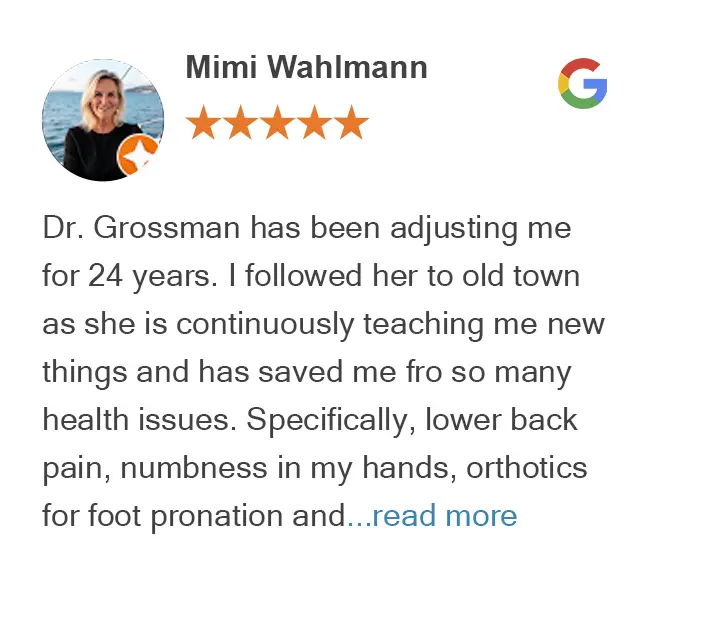
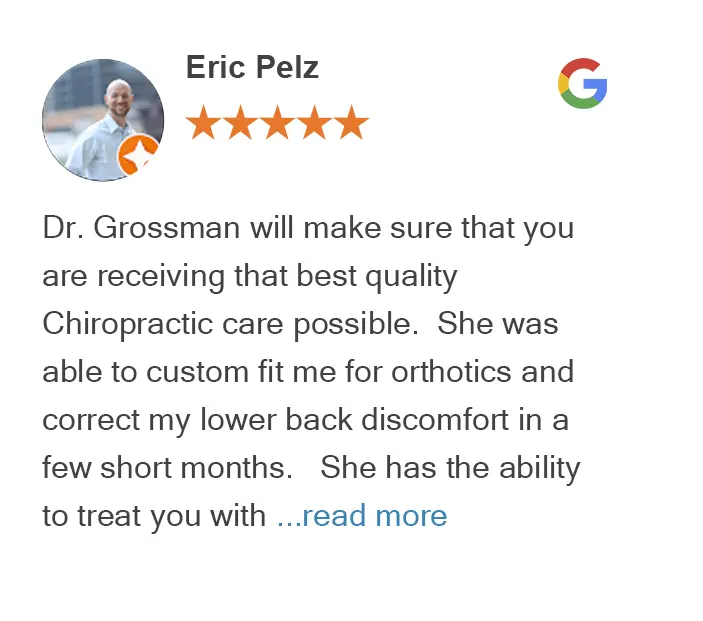
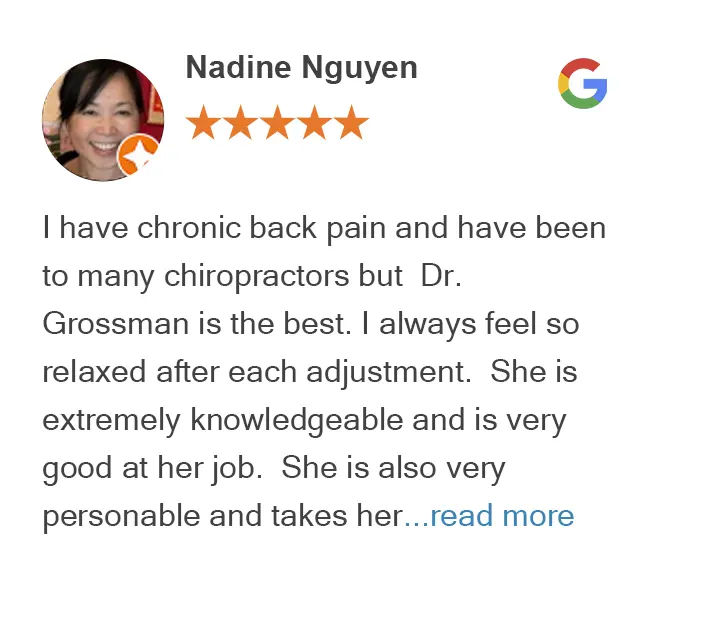


Doctor Experience in Treating Sports Injuries
Dr. Elissa Grossman regularly treats athletes of all levels, from recreational sports enthusiasts to highly active professionals. She sees seasonal trends in Chicago, including pickleball, tennis, and outdoor training injuries. Her care focuses on restoring motion, correcting biomechanics, and supporting long-term athletic health through ongoing education and experience
Book A Appointment
If a sports injury is limiting your performance or daily activity, early care matters. Call Chiropractic Chicago at (312) 248-3002 or use the booking tool below to schedule an evaluation and start moving with confidence again.
Can chiropractic help severe stiffness or limited mobility from sports injuries?
Yes. Care focuses on restoring joint motion and reducing nerve irritation that contributes to stiffness.
Can a chiropractor help a pinched nerve from sports activity?
Chiropractic adjustments aim to relieve pressure on irritated nerves by restoring proper joint movement.
Should I see a doctor or chiropractor for sports injuries?
Many athletes choose chiropractic for conservative, non-invasive care. Referral is provided if additional imaging or care is needed.
What causes sports injuries to worsen over time?
Uncorrected mechanics and ongoing stress can speed up joint and nerve degeneration.
Home care tips for sports injuries?
Rest from aggravating activity, gentle mobility, ice or heat when appropriate, hydration, and early evaluation if pain persists.
What if I’ve already had surgery?
Chiropractic care may still help improve mobility and mechanics, depending on your condition.
Benefits of Chiropractic Sports Injury Treatment
Chiropractic care offers athletes more than short-term pain relief.
- Restores proper joint motion for smoother, more efficient movement
- Reduces nerve irritation that can limit strength and coordination
- Supports faster recovery by improving biomechanics
- Helps prevent repeat injuries by correcting underlying causes
- Protects long-term joint health without invasive procedures
This approach helps athletes stay active while minimizing long-term wear and tear on the body.
Long-Term Consequences of Ignoring Sports Injuries
Ignoring sports injuries can allow minor problems to turn into chronic conditions. Dr. Grossman explains that unresolved alignment issues and nerve irritation can speed up joint degeneration over time. As the body compensates, stress often shifts to other areas, increasing the risk of additional injuries. In some cases, untreated problems may progress to a point where conservative care is no longer effective, leading to more invasive options. Early evaluation and non-invasive chiropractic care help protect long-term mobility and athletic longevity.
At-Home Care Tips
Between visits, athletes can support recovery by avoiding activities that worsen pain while staying gently mobile. Ice or heat may help depending on the stage of injury. Light stretching and movement drills can maintain flexibility without overloading healing tissues. Proper hydration and nutrition support tissue repair, especially during intense training periods. If pain persists, worsens, or begins affecting performance, professional evaluation is important to prevent long-term setbacks.